· Maya Sinclair
How to Tell If a Crystal Singing Bowl Is Real (and What It Should Cost)
Type "crystal singing bowl" into a search bar and the results blur together. The photos look alike, the descriptions borrow the same words, and the prices scatter so widely that the same object seems to exist in five different economies at once. Somewhere in that spread sit bowls that are genuinely cast quartz, and bowls that are ordinary glass wearing the vocabulary.
The difference is not subtle. Quartz and glass part ways in how they sound, how they measure, and how they feel. This guide walks through each check in the order you can run them, then puts real numbers on what a genuine bowl sells for.
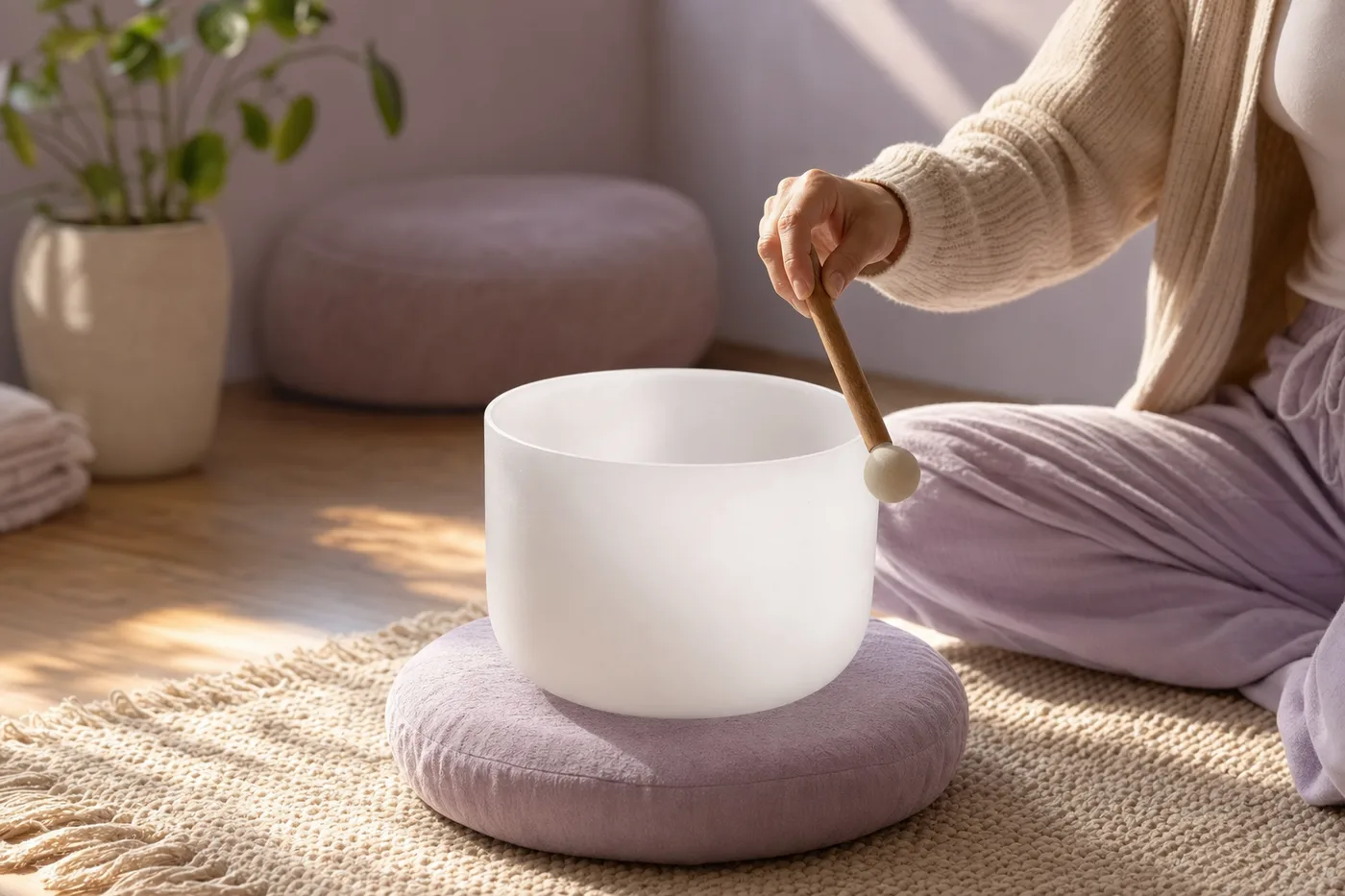
Quartz or glass: what a real bowl is actually made of
A genuine crystal singing bowl begins as quartz sand — silica — melted and cast into a thick-walled shell, then ground and tuned until it rings at a target note. The material is the point. Quartz is nearly all silica; ordinary glass is not.
Typical silica content of common soda-lime glass — the remainder is mostly sodium and calcium oxides added to make it cheaper to melt and shape
— CRC Handbook of Chemistry and Physics, 2023
Those added oxides are what make everyday glass practical for bottles and windows: they lower the melting temperature dramatically. Casting near-pure quartz means working close to the melting point of silica itself, which is why a real bowl is a furnace product rather than something blown or molded like decorative glassware.
Approximate melting point of silica (quartz sand), the raw material a genuine crystal bowl is cast from
— CRC Handbook of Chemistry and Physics, 2023
That manufacturing gap is the root of every practical difference on this page. The same additives that make glass easy to shape also make it lossier — it soaks up its own vibration — while near-pure cast quartz holds a vibration with remarkably little internal waste. You do not need a lab to detect any of this: your ears, a free phone app, and your hands are enough.
One clarification, because it trips up first-time buyers: frosted versus clear is not real versus fake. Both are cast from the same quartz; the frosted, matte surface on our bowls is a finish choice — grippier mid-session, slower to show scuffs — not a lesser grade of crystal. The duel that matters for tone is quartz versus metal, which has its own comparison guide.
The sound test: the sustain gives it away
Strike a genuine quartz bowl once, softly, and then do nothing. The tone should hang in the room and fade gradually — a long, even exhale rather than a clipped note. Lift the mallet after rimming and the same thing happens: the bowl keeps singing on its own, draining the energy you fed it slowly.
That long decay is not a party trick; it is the material talking. Quartz wastes very little energy internally on each flex of the wall, so a vibration, once established, has few ways to escape except slowly, as sound. The full mechanics — stick-slip friction, the four moving zones of the rim — are laid out in our guide to why crystal singing bowls sing.
A glass look-alike fails this test in seconds. Struck, it gives a brighter, thinner clink that dies quickly. Rimmed, it struggles to build a tone at all, because the energy you feed it leaks away as fast as you supply it. If a listing's own demo video cuts away immediately after the strike, the sustain is the thing you were not shown.
Run the test fairly: set the bowl on its rubber o-ring on a firm surface — held in the hand or set on carpet, even a genuine bowl sounds short. And listen for one dominant note rather than a clangy mix; an evenly cast quartz wall reads clean and single.
The tuner test: a note you can verify in one minute
Every genuine bowl is tuned to a named note at a named reference pitch — ours ship at either 432 Hz or 440 Hz, chosen at checkout. That claim is checkable by anyone with a smartphone: open a free chromatic tuner app, rim the bowl steadily, hold the phone a few inches away, and let the reading settle. The note on the screen should match the note the bowl was sold as, steady, not wandering.
Standard reference tunings offered across all three Quartzia bowl configurations
— product specifications, 2026
This is the single strongest authenticity check, because it tests the expensive part. Melting silica gets you a bowl-shaped object; grinding that object until it rings at a chosen pitch is the precision work a decorative piece skips. A bowl that reads a clean, stable note was tuned on purpose. One verified buyer of our 7-bowl practitioner set did exactly this — checked a bowl against a physical tuner and confirmed it landed on its stated 432 Hz.
The step-by-step method and the full note-to-frequency table are in our frequency guide. If a seller cannot tell you what note a bowl plays, that is not a detail they forgot; on a genuine bowl the note is the specification everything else was built around.
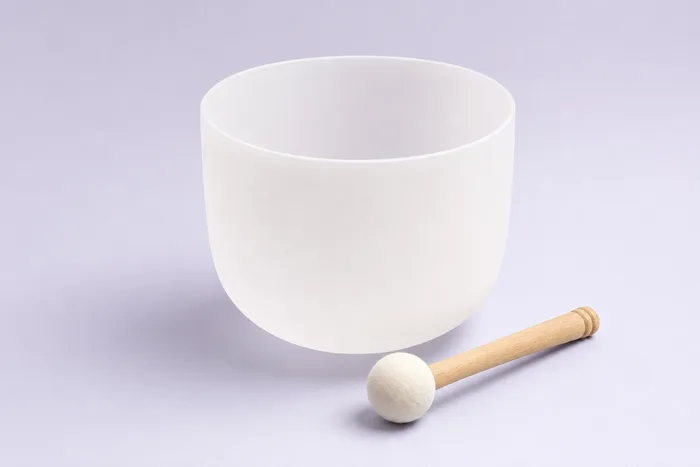
Surface, weight, and the checks your hands can run
With the bowl in front of you, three more checks take under a minute combined.
The frosted surface should be texture, not paint. On a genuine frosted bowl, the matte look is a fine physical texture in the quartz itself — run a fingertip across it and you feel a faint, even grip, like very fine etched glass. A coating that sits on top of a shiny surface, flakes at the rim, or rubs off on a cloth is decoration, not finish. (That texture is also why a real bowl is cleaned with nothing harsher than a microfiber cloth — our care guide covers what the finish tolerates.)
The bowl should have real heft. A cast quartz wall is thick — it has to be, to hold the vibration — and the mass is obvious the moment you lift one. A look-alike built to hit a low price tends to be thin-walled and startlingly light for its size. The tell is the mismatch between how big the bowl looks and how little it announces in the hand.
The rim should be even and unchipped. The rim is where the mallet lives and where the vibration is largest, and quartz is hard enough to take that contact for years.
Hardness of quartz on the Mohs mineral hardness scale, the material a genuine crystal singing bowl is cast from
— Mohs hardness scale, Friedrich Mohs, 1812
Sight down the rim at eye level: it should run level and uniform, with no waviness, no molding seam, and no chips. A visible seam means a molded object, and molded is the opposite of ground-and-tuned.
What a real crystal singing bowl costs
Now the second half of the question. Genuine cast quartz has a floor price — the material, the casting, and the tuning work see to that — and the Quartzia range shows where that floor sits for each configuration.
| Configuration | Sizes | Included | Price |
|---|---|---|---|
| Single bowl | 8", in any of the seven notes | Mallet, o-ring | $99.95 |
| 3-bowl set | 6", 8", 10", graduated | Mallets, o-rings (×3) | $179.95 |
| 7-bowl practitioner set | 7"–12", a graduated octave | Mallets, o-rings, padded carrying case | $459.95 |
All three ship free and carry a 30-day money-back guarantee.
Two patterns in that table generalize to the whole category. First, size moves price: a bigger bowl is more quartz, a longer casting, and a lower note, so a 12-inch bowl will always cost more to make than a 7-inch one. Second, bowl count beats buying singles: a graduated set costs meaningfully less per bowl than assembling the same bowls one at a time. What does not move the price at Quartzia: the note you choose, or 432 Hz versus 440 Hz — the same bowl tuned to a different target.
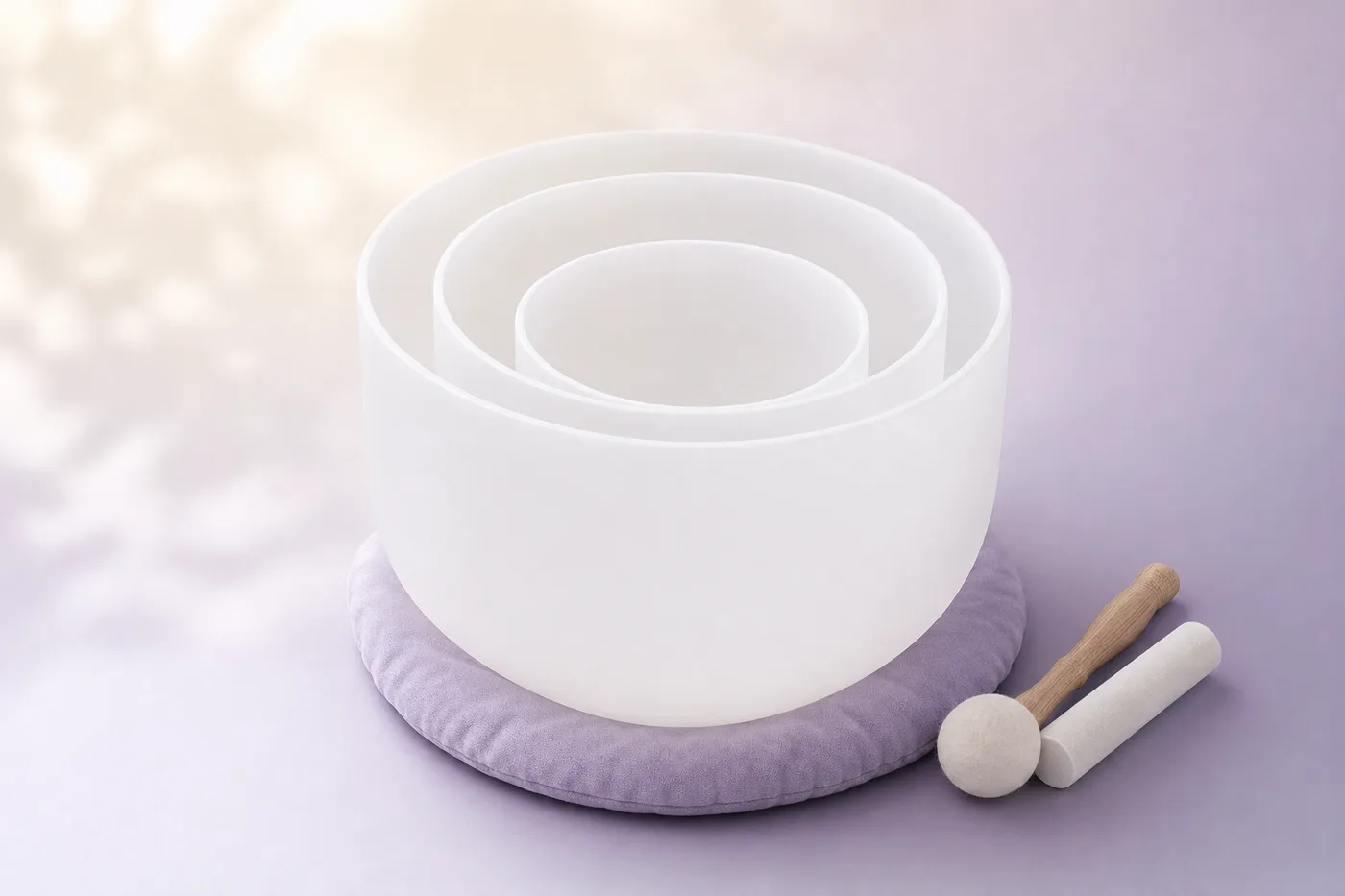
Why two bowls the same size can sit at very different prices
Once the material is genuinely quartz, the remaining spread comes from work you cannot see in a product photo. Every item below either shows up in your first session or shows up as a problem.
- Tuning that was verified, not just claimed. Grinding a bowl to a target pitch and checking it costs real labour. An untuned decorative casting skips that entire step, which is exactly what its price reflects.
- Packaging that survives the trip. A thick quartz bowl is durable in use and vulnerable in transit. Molded foam, double boxing, and a padded case on larger sets are part of the cost of the bowl arriving as a bowl.
- Accessories in the box. A mallet and an o-ring are not extras; without them the bowl cannot be played or seated properly. A listing that ships the bowl alone moves those costs to you.
- A review history you can inspect. Our 7-bowl set carries a 4.8★ average across 58 verified reviews, with buyer photos — the verbatims are on our reviews page.
Run the logic in reverse and the very low outliers explain themselves: a price that undercuts the cost of cast, tuned, safely-packed quartz is telling you one of those steps did not happen. The checks earlier on this page will show you which one.
What decides the value of an older crystal bowl
People also ask what an older bowl — inherited, second-hand, or rediscovered in a closet — is actually valued at. The answer is condition, almost to the exclusion of age. Quartz does not fatigue on a human timescale, so a decades-old bowl that was stored well plays like a new one, and its value tracks four things you can check in minutes:
- The rim. Chips or cracks at the rim sit exactly where the vibration is largest, and they show up in the tone. An intact rim preserves most of the bowl's value; a chipped one costs it dearly.
- The sustain. Strike it and listen. The long fade should still be there. A bowl that sounds choked either has hidden damage or is not quartz at all.
- The note. A tuner app should still read one clean pitch. Older bowls sold before tuning references were printed on listings can be identified this way after the fact.
- The kit. The mallet, o-ring, and case are replaceable, but a complete set is simply more usable, and its value follows.
If the older bowl passes all four, you own a working instrument. If it fails them — or if you are weighing an unknown second-hand piece against a known quantity — a new bowl with a 30-day money-back guarantee removes the gamble.
The one-minute checklist to run on any bowl
- Listen for the sustain. A genuine bowl keeps ringing after the mallet lifts; a glass look-alike clinks and dies.
- Read the note with a tuner app. One steady pitch, matching the note the bowl is sold as. A bowl sold without a named note is itself an answer.
- Feel the surface. Frosted should be texture in the quartz, never a coating that flakes or rubs off.
- Lift it. Cast quartz has heft; a suspiciously light bowl has a suspiciously thin wall.
- Check the price against the work. Tuning, packaging, accessories, and a real review history are what a fair price is buying.
Every Quartzia bowl is frosted quartz, tuned to 432 Hz or 440 Hz by note, and ships with a mallet. If you are ready to run the sustain test on a bowl of your own, the single 8-inch bowl is the place most practices start.
Real crystal singing bowls: FAQ
How can you tell if a singing bowl is real crystal?
Run three checks: the sustain (a genuine quartz bowl keeps ringing and fades gradually after you lift the mallet), the tuner reading (one steady note that matches the listed pitch), and the surface (a frosted texture you can feel, not a painted coating). A glass look-alike fails the first two almost immediately.
How much does a crystal singing bowl cost?
At Quartzia, a genuine frosted quartz bowl starts at $99.95 for a single 8-inch bowl with its mallet and o-ring. A graduated 3-bowl set (6", 8", 10") is $179.95, and the 7-bowl practitioner set with a padded carrying case is $459.95. Size and bowl count move the price; the note you pick does not.
Is a frosted bowl less genuine than a clear one?
No. Frosted and clear bowls are cast from the same quartz; the difference is surface finish, not material. Frosted bowls carry a matte texture that is easier to grip mid-session and shows fewer scuffs over years of use, which is why every bowl we list is frosted.
Does an older crystal bowl keep its value?
Its value follows its condition, not its age. A bowl with an intact rim, a long even sustain, and a note a tuner still reads cleanly has lost nothing that matters. Chips on the rim, a buzzing tone, or a sustain that dies early are what erase an older bowl’s value.

Maya Sinclair · Sound healing practitioner and crystal bowl curator
Maya has practiced sound healing since 2020 and writes Quartzia's guides to playing, tuning and caring for frosted quartz singing bowls.
Free shipping · 30-day money-back guarantee
More: how the sound is produced, crystal vs Tibetan bowls, all guides.