· Maya Sinclair
How to Build a Crystal Singing Bowl Meditation Practice
Most people who buy their first crystal singing bowl make the same mistake. They play with it for five minutes, decide they must be "doing it wrong," and let it sit on a shelf. A meditation practice built around a singing bowl works like any other habit: it needs a simple structure, a realistic time commitment, and a way to tell whether it's actually helping. This guide walks through all three, plus the routine we hand to every new Quartzia owner.
Why structure matters more than gear
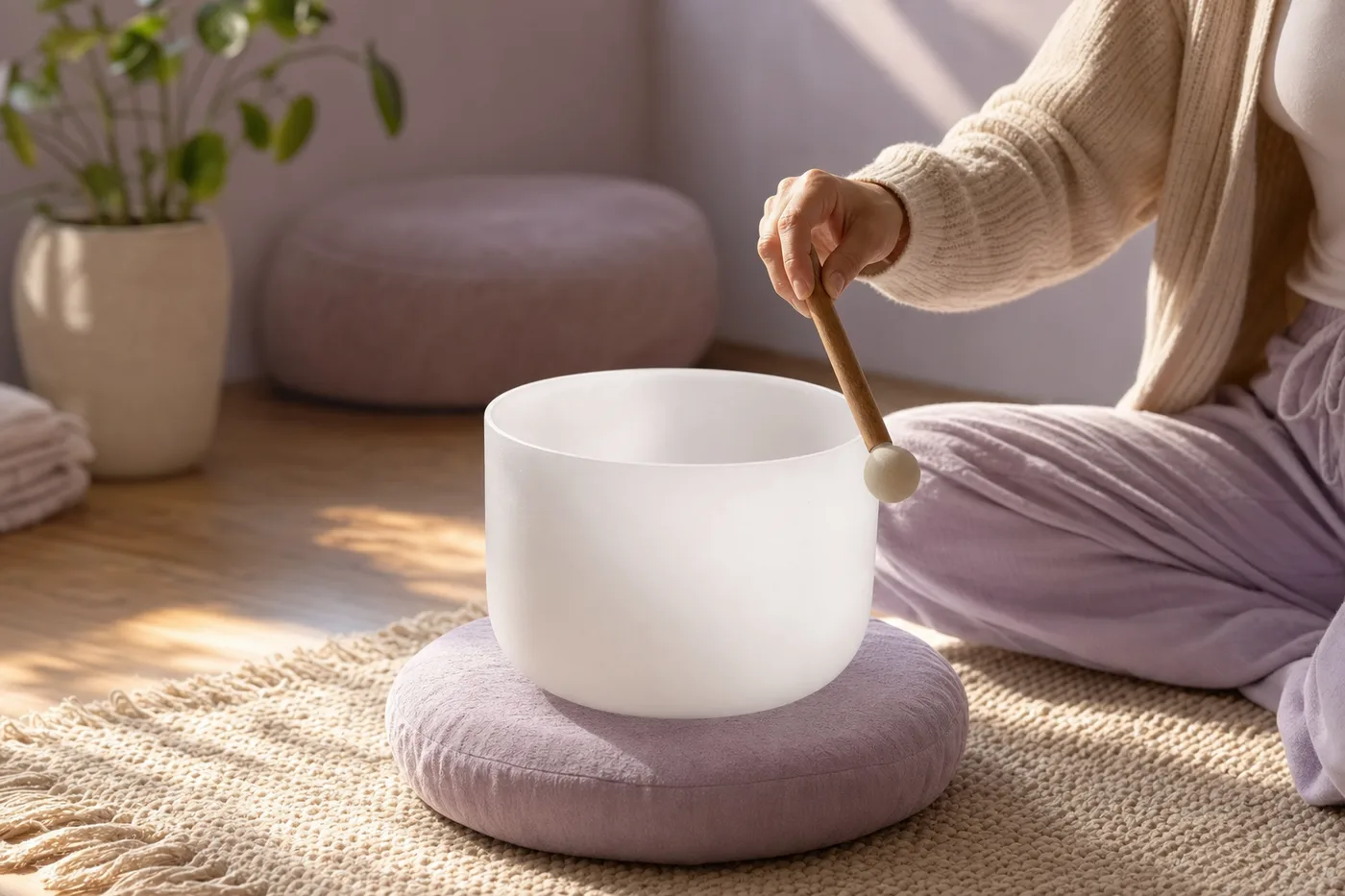
Whether you start with a single 8-inch bowl or the full 3-bowl practice set, the instrument itself is only half the equation. The other half is what you do around the sound: how you sit, how you breathe, and how long you let silence stretch out after the tone fades. Skip that structure and even a beautifully tuned bowl feels like a party trick. Build it, and a five-minute session starts to feel like a genuine reset.
The 4-part session structure
Every sound meditation session we teach follows the same shape, whether it runs five minutes or thirty. Beginners tend to skip the first and last phases, which is exactly why sessions feel unfinished.
| Phase | Duration | What to do |
|---|---|---|
| Settle | 1-2 min | Sit upright, close your eyes, take three slow breaths before touching the mallet |
| Sound | 3-8 min | Strike or rim the bowl, follow the tone to silence, then repeat |
| Silence | 2-3 min | Sit in the quiet after the last tone fades and notice how your body feels |
| Close | 1 min | Open your eyes, take one more breath, name one word for how you feel |
Pairing your bowl with breathwork
The sound does most of the work, but pairing it with slow, deliberate breathing is what turns a nice tone into a practice. A simple 4-4-6 pattern (inhale for 4 counts, hold for 4, exhale for 6) during the "Settle" phase primes your nervous system before the bowl even starts ringing.
Slow diaphragmatic breathing measurably quiets the stress response (heart rate, cortisol)
— Harvard Health Publishing, 2020
You don't need to master a breathing technique before you start. Even three unhurried breaths before the first strike changes how the session lands. If you're deciding between our three bowl sizes for this kind of routine, our frequency guide breaks down how tone and pitch relate to session pacing.
A 10-minute beginner routine you can start tonight
- Minute 0-1: Sit on a cushion or chair, bowl within arm's reach on a stable, non-carpeted surface if possible so the tone resonates cleanly.
- Minute 1-2: Three slow breaths, eyes closed, hands resting on your knees.
- Minute 2-7: Rim or strike the bowl gently, let each tone ring fully before starting the next.
- Minute 7-9: Silence. No phone, no timer sound, just the after-ring in the room.
- Minute 9-10: One closing breath, eyes open, done.
If your mallet grip or strike technique feels awkward at first, that's normal. We cover it step by step in how to play a crystal singing bowl, including the two most common reasons beginners can't get a clean, sustained tone.
How often should you actually practice?
Consistency beats duration. Three 10-minute sessions a week for a month will do more for a lasting habit than one 45-minute session that leaves you too tired to repeat it. This mirrors a broader trend in how Americans approach meditation generally.
Share of US adults who reported practicing meditation, over one decade
— National Center for Complementary and Integrative Health / CDC National Health Interview Survey, 2022
That's a more than fourfold increase in ten years, and it tracks with what we hear from our own customers: most people don't start with a grand daily ritual, they start with two or three short sessions a week and build from there.
What the research actually says about sound meditation
A singing bowl is a relaxation tool, not a medical treatment. But there is real, peer-reviewed research specific to this practice.
Reductions in tension, anger, and fatigue scores measured after a single Tibetan singing bowl sound meditation session
— Goldsby, Goldsby, Blustin & Miller, Journal of Evidence-Based Integrative Medicine, 2017
The study, one of the few peer-reviewed papers focused specifically on singing bowl sound meditation, measured mood before and after a group session using validated psychological scales. Participants reported statistically significant drops in negative mood states and an increase in reported well-being. It's a modest, observational study, not a clinical trial, so we treat it as supporting evidence for a relaxation practice rather than proof of any medical benefit.
Common beginner mistakes
- Rushing the silence phase. The after-ring and the quiet that follows it are part of the practice, not dead air to skip.
- Playing on a soft, absorbent surface. A carpeted lap or thick cushion under the bowl muffles resonance. A firm, stable surface lets the tone sustain properly.
- Switching bowls every session. If you own our 3-bowl set, it's tempting to rotate constantly. Beginners usually build a steadier practice by sticking with one bowl for the first few weeks.
- Treating it like background noise. A meditation session works best as focused, undistracted time, not a soundtrack for scrolling your phone.
Where meditation fits into a wider sound healing practice
A meditation routine is usually the entry point, not the destination. Many practitioners eventually explore group sound baths, chakra-focused sessions, or full sound healing routines that use multiple bowls in sequence. Buyer feedback on the 7-bowl practitioner set is on our reviews page.
Building the habit long term
The customers who stick with this longest tend to do three things: they keep the bowl somewhere visible (not in a closet), they don't chase a "perfect" session every time, and they track how they feel afterward, even just a single word in a notes app. If you have questions about which setup fits your space or routine, our team is easy to reach through the contact page. And if you're still comparing bowl styles before committing, our breakdown of crystal vs Tibetan singing bowls covers the practical differences in tone and tradition.
A consistent, unglamorous 10 minutes, three times a week, beats an ambitious routine you abandon after day four. Start small, keep the structure above, and let the habit build itself.

Maya Sinclair · Sound healing practitioner and crystal bowl curator
Maya has practiced sound healing since 2020 and writes Quartzia's guides to playing, tuning and caring for frosted quartz singing bowls.